
Lower Unit and Marker Flags of the Whites in the East of Russia
Russian Army of the Supreme Ruler
Supreme Commander-in-Chief of the Russian Land and Naval Forces
A rectangular cloth with 5 black and 5 orange stripes on a Cossack lance. [1]
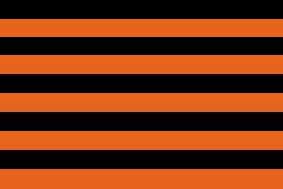
From a photo seen in various publications
Commander of the 3rd Army, 2 July 1919, in the Ailinsk Operation
A St. George pennon at the head of the Cossack escort. [2]
Sakharov, K. V. in "White Siberia: Admiral Kolchak's Eastern Front", Moscow, 2004, p.161.
Votkinsk Battalion
A silk flag, kept by M. N. Ivanitskiy, a relative of Colonel B. E. fon Vakh. This flag can be seen on the wall in a photograph of Izhevtsy and Votkintsy taken in Girin in 1923. It is currently in the collection of Moscow researcher M. Yu. Blinov. The photograph was taken by M. V. Molchanov (son of General V.M. Molchanov). Apparently, it was carried on a bayonet. [3]
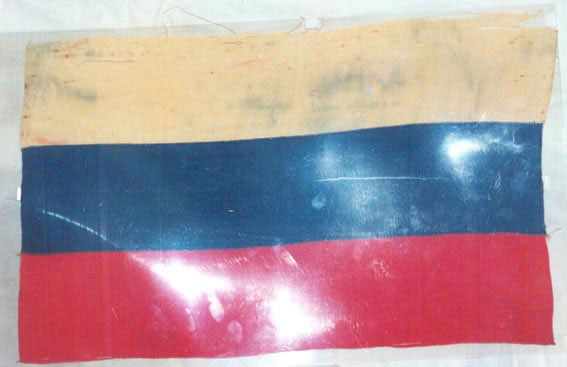
The flag of the Votkinsk battalion
Photograph kindly provided by Votkinsk researcher S. K. Prostnev.
6th ... Regiment
A white diamond on a dark (probably raspberry) rectangular panel, the ends of which reach to the edges of the panel. In the center of the diamond is the cipher "6.С.П." [4]
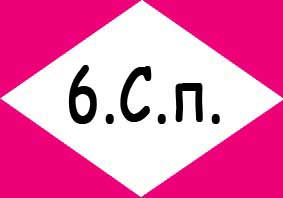
Photographs from the House Museum of the 25th Chapaev Division.
Krasny Yar, Ufa district, Republic of Bashkortostan
Information kindly provided by Ufa researcher S. G. Shushpanov.
Unidentified Unit
It is a white cloth with a black circle in the center, from which four black rays extend to the corners. It is on display in the Irkutsk Museum of Local Lore, attributed as a "flag of Kolchak's army".
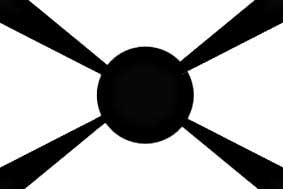
From www.vexillographia.narod.ru
51st Siberian Rifle Regiment
The staff flag of the 51st Siberian Rifle Regiment of the 11th Siberian Rifle Division.
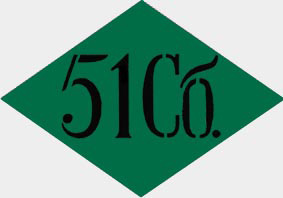
Reconstruction based on a photograph depicting the regiment's participation in a parade on 15 June 1919 in Barnaul. The flag is carried by a mounted group ahead of the infantry units. [5]
siberia.forum24.ru/?1-4-0-00000027-000-10001-1
1st Immortal Shock Regiment
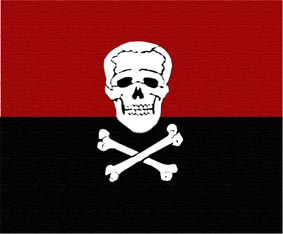
Reconstruction of a unit marker flag based on the photo published in bergenschild.com [6]
Tobol'sk group during the Great Siberian Ice Campaign
Which of the participants in the Siberian Campaign does not remember the bulky cart, escorted by a platoon of cavalry, with a white and green flag in front, and behind the cart a dozen or two, three sledges drawn by pairs and threes? The front horsemen shouted, "Make way, the group commander is coming", and when some dark-skinned soldier from the convoy being overtaken shouted back, "Don't break up the convoy", it often came to blows.
Sitnikov, M. G. and Veber, M. I. in "In military affairs, if I ever knew anything, I forgot it long ago: Lieutenant A. M. Smirnov's report on Major General A. V. Bordzilovsky // Idnakar: Methods of Historical and Cultural Reconstruction: Scientific and Practical Journal: Izhevtsy and Votkintsy in the Civil War, No. 1 (30)", 2016, p.231.
Far Eastern Army
HQ of the Commander-in-Chief of the Eastern Front
Shown for February 1920 in Mysovsk, the flag is half Russian tricolor, half white with a blue St. Andrew's Cross.
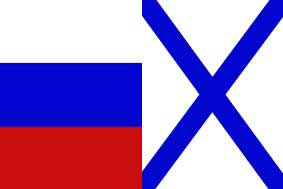
Sakharov, K. V. in "The Siberian Ice Campaign // The Great Siberian Ice Campaign", Moscow, 2004, p.66.
Izhevsk Division HQ Marker
During the Khabarovsk campaign, late October 1919, it was left in Bishkul village during a hasty retreat by the HQ. It was recaptured by the 1st Izhevsk Regiment.
Efimov, A. G. in "Izhevstsy and Votkinstsy // Admiral Kolchak's Eastern Front", Moscow, 2004, p.495.
Votkinsk Artillery Battery
The battery isignia is black velvet with a red border and capital letters "ИДВ".

Filimonov, B. B. in "Belopovstantsy", Shanghai, 1933, p.2.
Other
"Kalmykovets" armoured train

Reconstruction
The flag is probably yellow cloth (the colour of the Ussuri Cossack Host) with the emblem of the special Cossack detachment in the upper left, although the letter "K" is not simple (as on the armbands), but in a monogram style.
voenforum.ru/index.php?showtopic=1300 [link dead].
Artillery unit in Novonikolaevsk
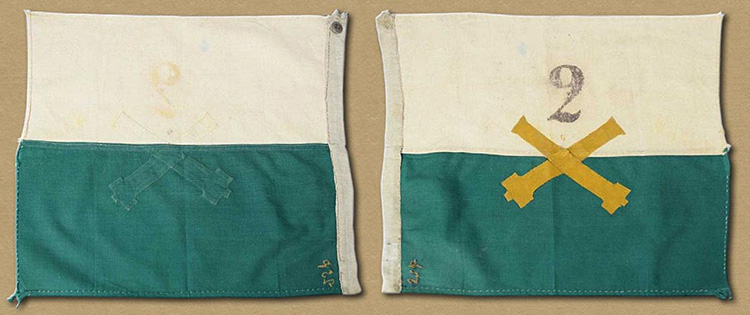
This appeared at an online auction in Texas in 2018 and was sold to a private collection. It was mistakenly attributed as "The flag of the Second Artillery Battalion of Kolchak's Siberian Army".
e-news.su/in-world/250839-v-tehase-nashlos-znamya-sibirskoy-armii-iz-novo-nikolaevska.html.
Home — State Symbols — Flags — Uniforms — Badges & Medals — Money — Other
Pygmy Wars Notes
The original of this page is at kolchakiya.ru/vexillology/banners.htm.
This page is for znachki, that is flags that were used to locate units and commanders, rather than znamëni, banners. The difference is discussed in the notes to the main flag page.
1) This is discussed in a bit more detail on the Kolchak's flags page, including the colour.
2) This might be merely yellow and black stripes, the traditional colours for commanders, a visual representation of the Order of St George or some combination of the two, such as this one.
3) Battalion flags were traditionally carried on bayonets (officially, bayonet scabards).
4) This is "6.S.P.", where the "P" is almost certainly for regiment (polk). The diamond in a rectangle with letter ciphers was standard Tsarist practice for larger unit marker flags (above battalion/squadron).
5) That photograph is here. It was taken by the French Military Mission. It would appear that the green is far paler than the Kolchakiya reconstruction.
6) The site is dead, but the photograph is this one here.