
Flags of the Supreme Ruler and Commander-in-Chief Admiral A.V. Kolchak (1919-1920)
The first mention of flags specially made for the Supreme Ruler of Russia, A. V. Kolchak, dates back to mid-May 1919. On 17 May, the M. I. Ivanov and Sons Company received an order for four white and green pennants for Admiral Kolchak's yacht, the Sibirsky Strelok, among various other naval flags. No documents confirming the approval of these flags or their description have survived to this day. It is unknown whether the order was ever fulfilled. It is known that later these colours were effectively banned from the armed forces subordinate to the Supreme Ruler.
Kuznetsov N. A. in "The Flag and Pennant of the Supreme Ruler of Russia A.V. Kolchak // The White Army, The White Cause No. 13", Ekaterinburg, 2003, p. 80, citing Russian State Naval Archive. F.1722r Op.7 C.193 L.53.
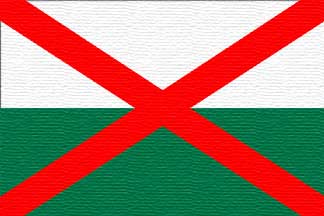
The version published at www.worldstatesmen.org/Russia_war.html
with the comment "Kolchak's Personal Standard".
Perhaps this is why a completely different design for the flag and pennant of the Supreme Ruler was soon approved.
On 7 May Rear Admiral V. V. Kovalevskiy, acting Minister of the Navy, submitted a memorandum to the Council of Ministers proposing that a 21-gun salute be given to the flag and pennant hoisted on ships when visited by the Supreme Ruler. According to the 1910 Code of Naval Regulations (which Kolchak's Naval Ministry tried to follow, while amending some of its articles in accordance with the changed conditions), such a salute was due to heads of foreign states, including presidents of republics. According to foreign maritime regulations, such a salute was performed in honour of uncrowned heads of state. On 9 May, a decree of the Council of Ministers, approved by Admiral Kolchak, was issued, which stated:
To supplement Book X of the Code of Maritime Regulations (1910 edition) with Articles 1294 and 1318 with the following content:
Art. 1294. The flag of the Supreme Ruler is a white flag with St. Andrew's Cross, with a pennant in the middle, in the centre of which the state coat of arms is depicted on a white rectangle. It signifies the presence of the Supreme Ruler and is raised and lowered at his personal command.
It is placed on the mainmast, but may also be raised on the bow flagpole of a boat. This flag is saluted with a 21-gun salute.
Art. 1318. The Supreme Ruler's pennant consists of the Supreme Ruler's flag with tassels. It signifies the presence of the Supreme Ruler and is raised and lowered by his personal order.
Its place is on the mainmast, but it can also be raised on the bow flagpole of the boat. No salute is given to the pennant.
Kuznetsov N. A. in "The Flag and Pennant of the Supreme Ruler of Russia A. V. Kolchak // The White Army, The White Cause No. 13", Ekaterinburg, 2003, p.81 citing GARF F.176 Op.6 D.208 L.1 and 4.
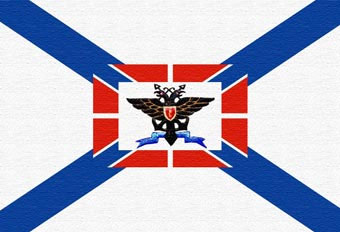
Flag of the Supreme Ruler, based on the flag design approved personally by him.
First published by V. V. Lobytsyn and reproduced by Kuznetsov N. A. in "The Flag and Pennant of the Supreme Ruler of Russia A.V. Kolchak // The White Army, The White Cause No. 13", Ekaterinburg, 2003, p. 81.
In general the flag's design repeats the design of the flag of the Minister of the Navy for the Russian Empire in 1908-1917. The only difference is that the Naval Minister's flag had an anchor in the centre of the white rectangle. A new, "naval" version of the coat of arms was chosen for the flag: a double-headed eagle (without attributes of imperial power) superimposed on crossed anchors. The same eagle was placed on the admiral's shoulder-boards, approved by Kolchak on 6 December 1918.
There is little doubt that this flag actually existed. For example, it is known that it was raised during Kolchak's visit to the Kama River combat flotilla in May 1919 and during the admiral's campaign from Omsk to Tobolsk in the autumn of the same year.
Kazimirov M. in "The Naval Centre in Siberia (1918-1919) // Maritime Collection", Bizerte, 1921. No. 5. p. 28.
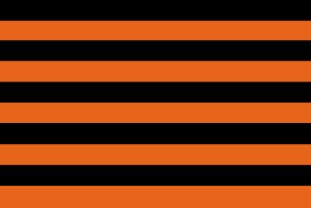
Flag of the Supreme Commander-in-Chief
Following Russian Imperial Army practice, this was used when Admiral A.V. Kolchak visited units and formations of the active Army. It was carried on a lance. There is a photograph, usually attributed as "A.V. Kolchak at the front" (in various publications) or "A.V. Kolchak inspects the ranks of the assault brigade" in which this flag is clearly visible.
"White Russia: Photo album", Moscow, 2003.
Home — State Symbols — Flags — Uniforms — Badges & Medals — Money — Other
Pygmy Wars Notes
The original of this page is at kolchakiya.ru/heraldry/Kolchaks_flags.htm.
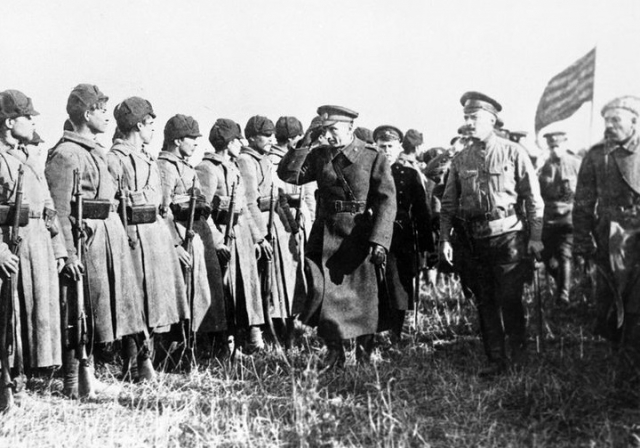
The picture "Kolchak visits the front" referenced above
The reference to "Following Russian Imperial Army practice" is that yellow and black were the Tsarist colours for commanders-in-chief, hence knowing the colours despite it being a black and white photograph. Note however that the colours used in kolchakiya are black and orange, which is the modern version – the Tsarist version was a lot more golden.