
Vexillology of the Czechoslovak Legion in Russia (1917-1920)
All reconstructions are by A. Karevskiy
The symbolism of the Czechoslovak Corps originated in 1914 with the banner of the Czechoslovak Druzhina, the first military formation of Czechs and Slovaks in Russia, which was consecrated on 28 September in Kiev. This was the first appearance of the combination of white and red, being the flag of the Kingdom of Bohemia (according to legend, it was the flag of the progenitor of the Czechs, Prince Čech).
Its further development took place in two directions:
1) Using the historical coats of arms of the lands that became part of the Czechoslovak Republic:
- Bohemia – a silver lion with a forked tail on a red field;
- Moravia – a chequered red and silver eagle on a blue field;
- Silesia – a black crowned eagle on a gold field with red beak and talons, an upwards silver crescent on its chest and wings, with silver trefoil ends and a Maltese cross emerging from above it in the middle;
- Slovakia – a silver patriarchal cross on a red field, placed on a mountain with three dark blue peaks, symbolising the main mountain ranges of the country: Matra, Tatra, and Fatra.
2) The symbols of the Hussite movement of 15th-century Bohemia (the soldiers of the Czechoslovak units in Russia, considering themselves to be their heirs) in the form of a combination of red and black colours and a communion chalice.
The Corps in 1917
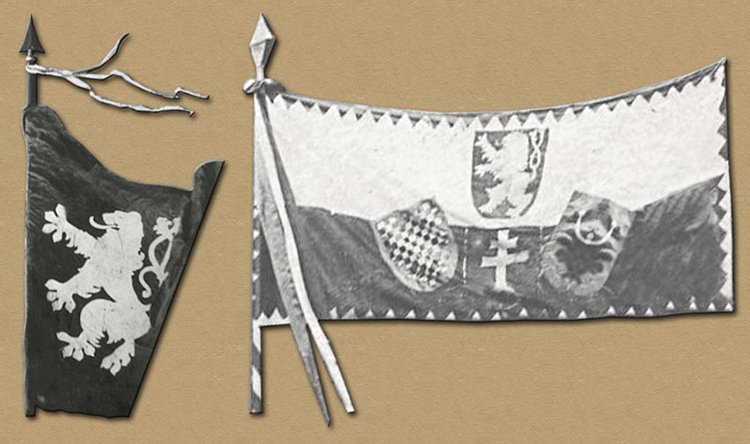
Flags of the Czechoslovak Corps units in Ukraine in the summer and autumn of 1917
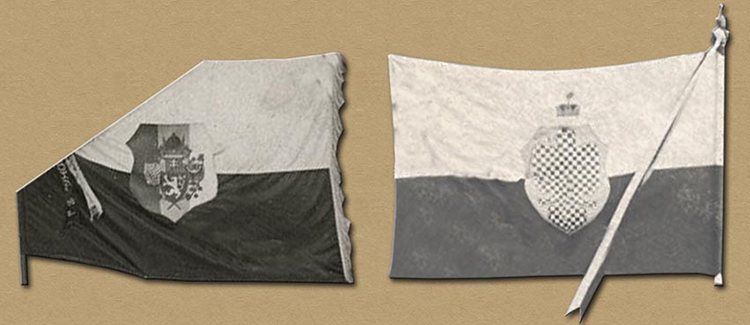
Flags of the Czechoslovak Corps units in Ukraine in the summer and autumn of 1917
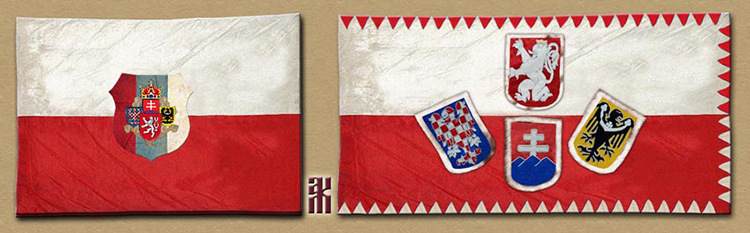
Reconstruction of the flags of the Czechoslovak Corps units in Ukraine in the summer and autumn of 1917
At this time the use of the four province's coats of arms began to be widely used, being added to the primary military insignia of the Czechoslovak army in Russia.
Regiments of the 1st Czechoslovak Hussite Rifle Division
Having adopted the name "Hussite", the division actively took appropriate symbols from the religious and national liberation movement in the Czech Republic of the XV century. As its regiments were formed, its Czech cultural tradition gradually developed, became more complex and rich. Battalion and company flags were also made in the Hussite tradition: using red and black colors with a Hussite chalice.
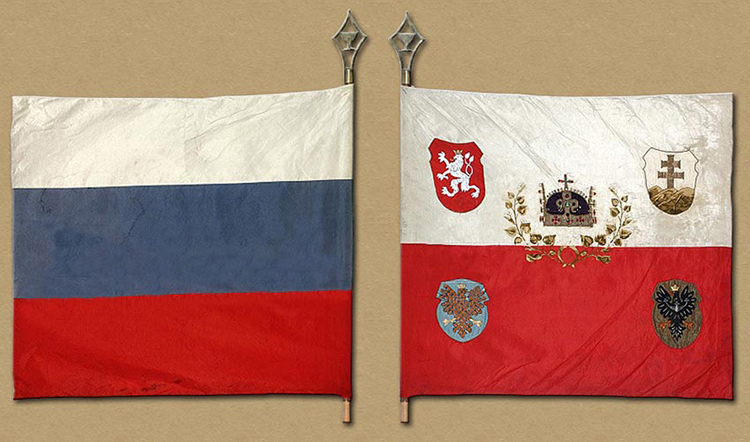
Banner of the 1st Czechoslovak "Jan Hus" Rifle Regiment
A former banner of the Czech Druzhina. Initially the finial was a Russian double-headed eagle without crowns, but after the February Revolution it was replaced by a slotted spear with a chalice.
After returning to Czechoslovakia, it continued to be used until 1939 by the 1st Infantry "Master Jan Hus" Regiment in Budejovice. In 1926 the ceremonial flags were exchanged for copies. It survived the [German] occupation and in 1953 he was transferred to the Military History Museum in Prague. After the restoration of the regiment in 2006, it continues to be used for special occasions in exceptional cases.
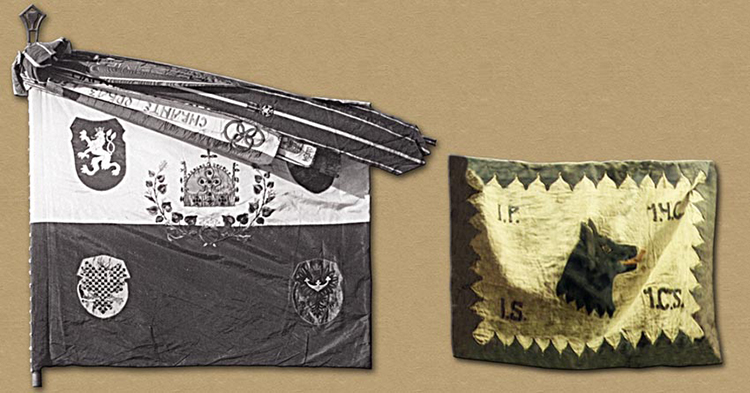
The banner of the 1st Czechoslovak "Jan Hus" Rifle Regiment and the pennon of its 1st Company
The regimental banner's ribbons include one for the Order of the Falcon. The symbol of the Order is clearly distinguishable.
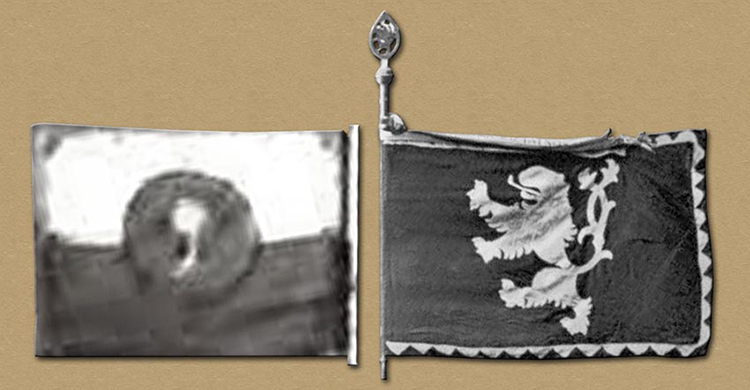
Banner of the 2nd Czechoslovak "George of Podebrad" Rifle Regiment
Here for the first time we see the combination of the Hussite chalice and the coat of arms of Bohemia in the form of a silver Lion, which became almost universal for the Czechoslovak units in Russia. The jagged edging of the cloth was inherited from the regimental banners of the Austro-Hungarian army (except using white-red of Czechoslovakia with rather than the German black-red-yellow).
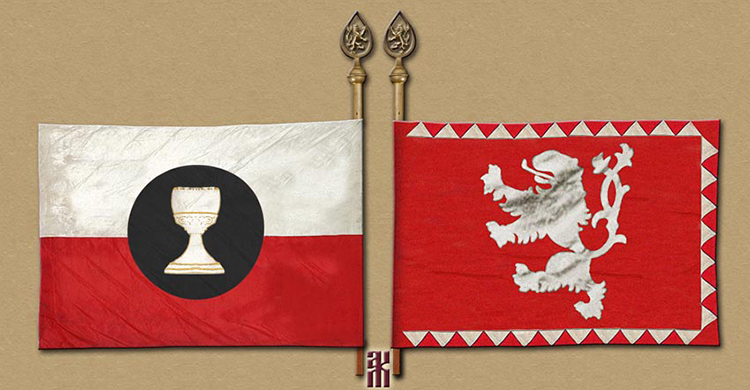
Reconstruction of the banner of the 2nd Czechoslovak "George of Podebrad" Rifle Regiment
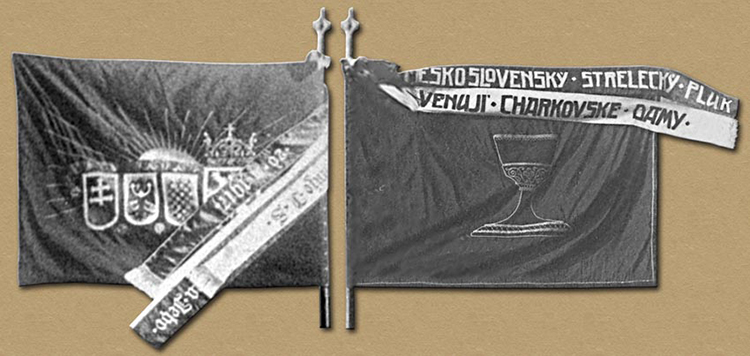
Banner of the 3rd Czechoslovak "Jan Zizka of Trocnov" Rifle Regiment
Here we see the second common combination of images: the Hussite chalice and the coats of arms of Bohemia, Moravia, Silesia and Slovakia.
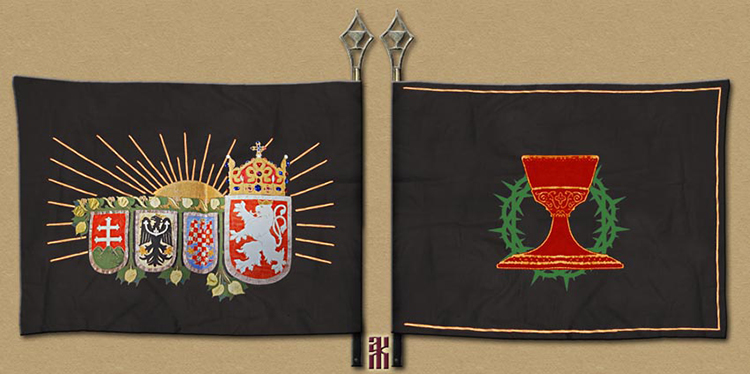
Reconstruction of the banner of the 3rd Czechoslovak "Jan Zizka of Trocnov" Rifle Regiment
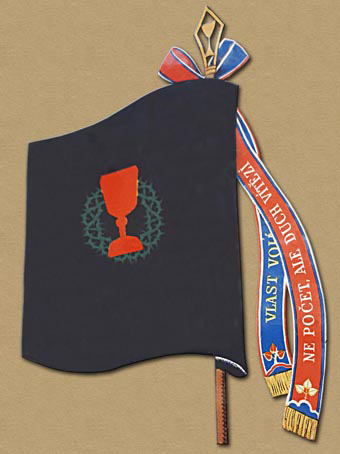
Banner of the 3rd Regiment from a 1937 poster for the regiment's 20th anniversary
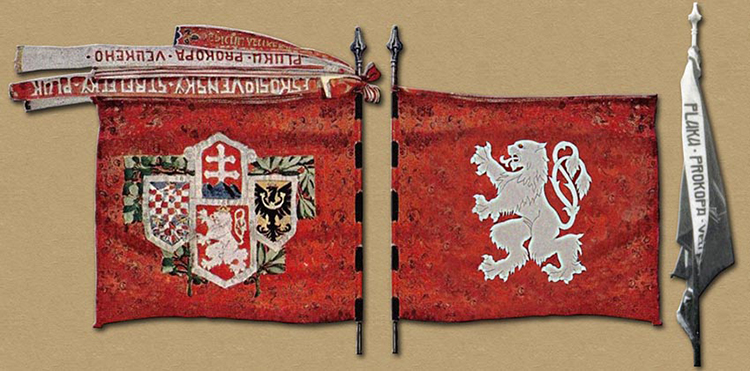
Banner of the 4th Czechoslovakian "Prokop the Great" Rifle Regiment
This arrangement of the provincial coats of arms would soon become the main military emblem of the Czechoslovak Army in Russia.
2nd Czechoslovak Rifle Division
The banners of the regiments of the 2nd Czechoslovak Rifle Division, which were created simultaneously, are decorated in the same style. Their fronts bear images of territorial coats of arms: the 5th "Prague" Regiment has that of the city of Prague; the 6th "Hanacky" Regiment has that of Moravia; the 7th "Tatran" Regiment has that of Slovakia; and the 8th "Silesian" Regiment has that of Silesia. Their color is determined by the field of the coat of arms. Their reverses had the state coat of arms of the Czechoslovak Republic: the image of the Bohemian Lion on a red field. The Hussite chalice is present on both sides, in the upper middle.
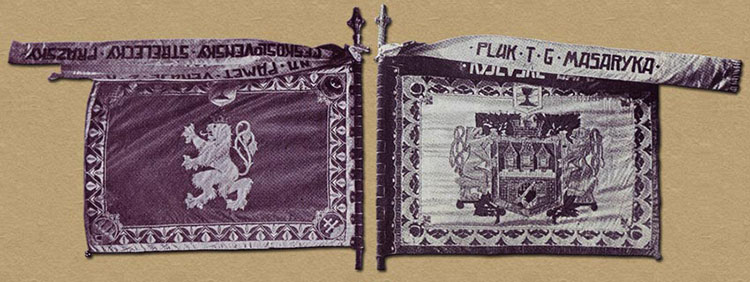
Banner of the 5th Czechoslovak "Prague Tomas Masaryk" Rifle Regiment (karelvasatko.cz)
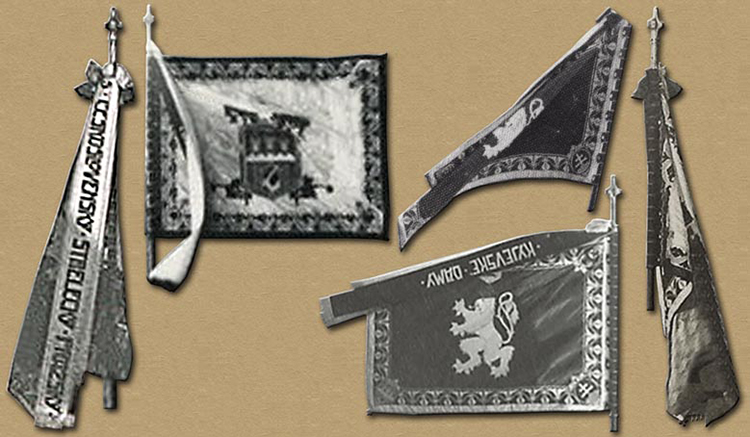
Banner of the 5th Czechoslovak "Prague Tomas Masaryk" Rifle Regiment.
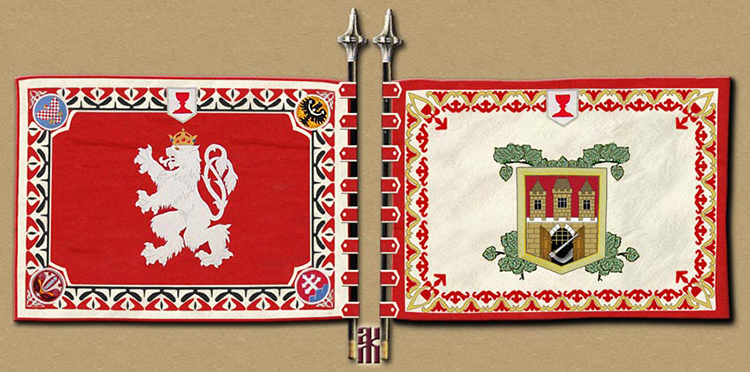
Reconstruction of the banner of the 5th Regiment.
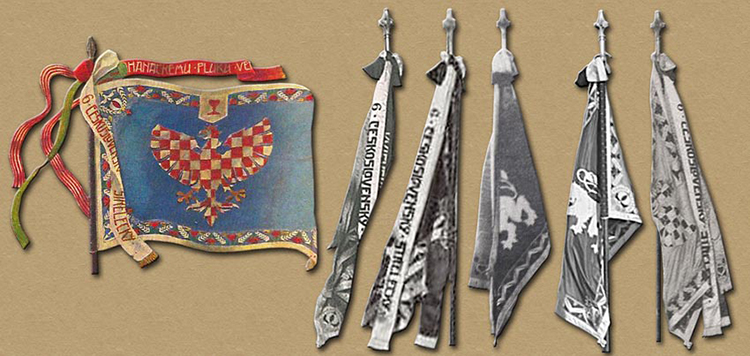
Banner of the 6th Czechoslovak "Hanacky" Rifle Regiment
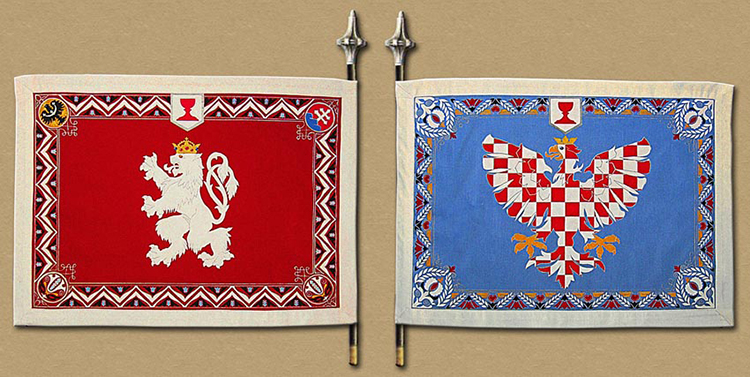
Reconstruction of the banner of the 6th Regiment
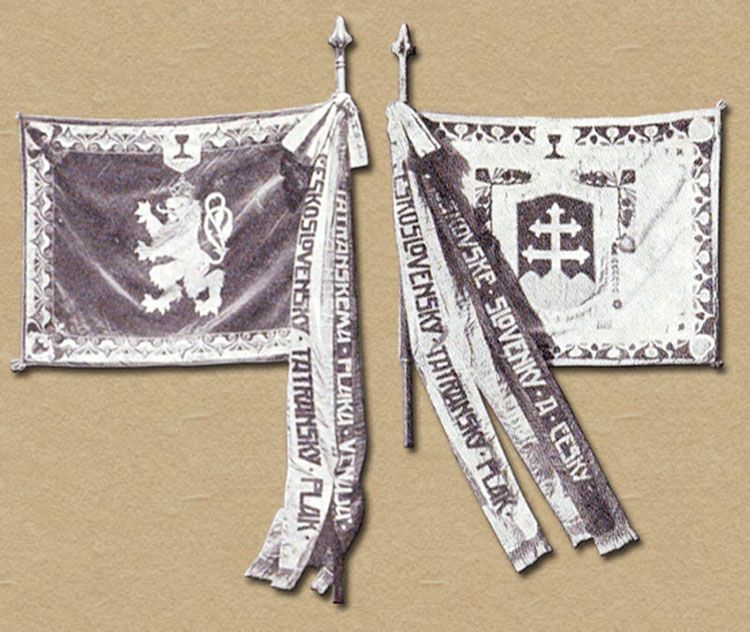
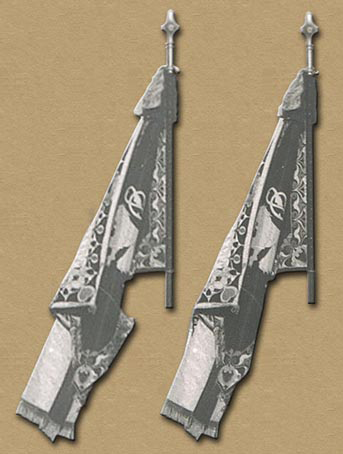
Banner of the 7th Czechoslovak "Tatran" Rifle Regiment from different views
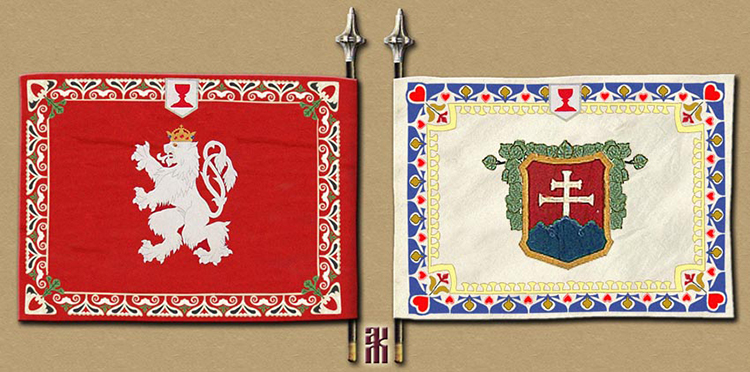
Reconstruction of the banner of the 7th Regiment
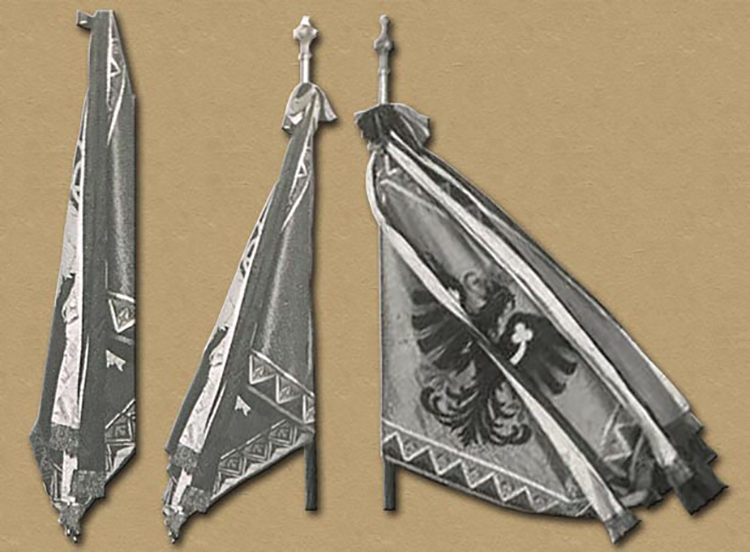
Banner of the 8th Czechoslovak "Silesian" Rifle Regiment
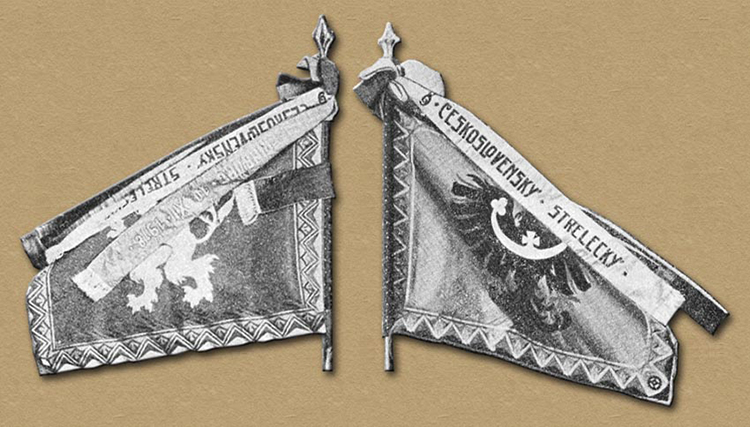
Banner of the 8th Czechoslovak "Silesian" Rifle Regiment
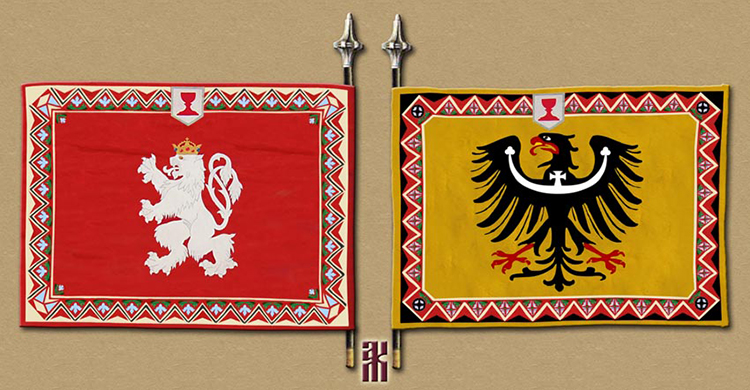
Reconstruction of the banner of the 8th Czechoslovak Regiment
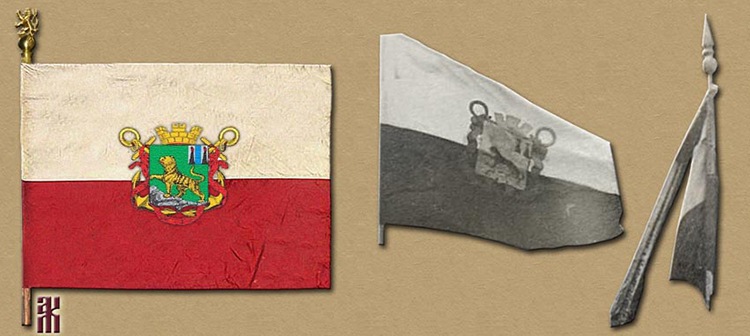
Banners awarded to the 5th and 8th Regiments in autumn of 1918 by the Vladivostok City Government
The base is a white over red cloth. In the centre is the coat of arms of the city of Vladivostok – a golden tiger with scarlet eyes and tongue, facing left, on a green shield, with the coat of arms of the Primor'e region, a blue pillar between two black hills with scarlet flames, placed in the top right. The shield is topped with a gold civic tower (three battlements) and is placed on crossed gold anchors wrapped with an Alexander ribbon. It is usually attributed as being awarded to the 3rd Czechoslovak Division, but photographs of the 5th Regiment with such a flag, dating back to autumn 1918, have been preserved.
3rd Czechoslovak Rifle Division
The flags of the regiments of the 3rd Czechoslovak Rifle Division were also created at the same time and were intended for the newly formed units in the Urals and Siberia. While the regiments of the 2nd Division were given "territorial" names, the regiments of the 3rd Division were named after prominent public, political and military figures of Czechoslovakia. With the exception of the banner of the 9th Regiment, which continued the traditions of the early stage of Czech vexillology, the banners of the 10th, 11th and 12th Regiments represented the next stage in its development. Their left panels were still designed in the tradition of the state coat of arms of the Czechoslovak Republic: the red field featured the image of the Bohemian Lion, but with the addition of separate territorial coats of arms. The right panels bore images of regimental emblems and, for the first time, inscriptions with the name of the unit.
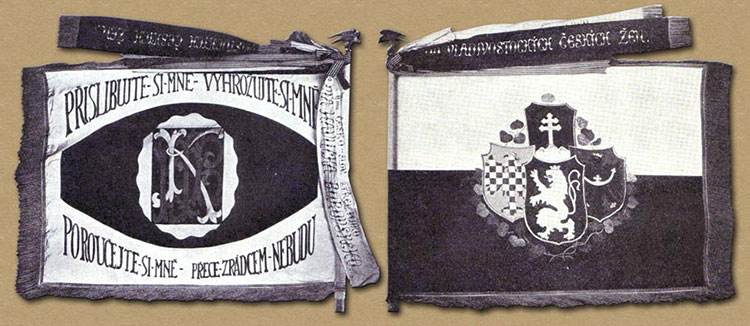
Banner of the 9th Czechoslovak "Karel Havlicek Borovsky" Rifle Regiment (karelvasatko.cz)
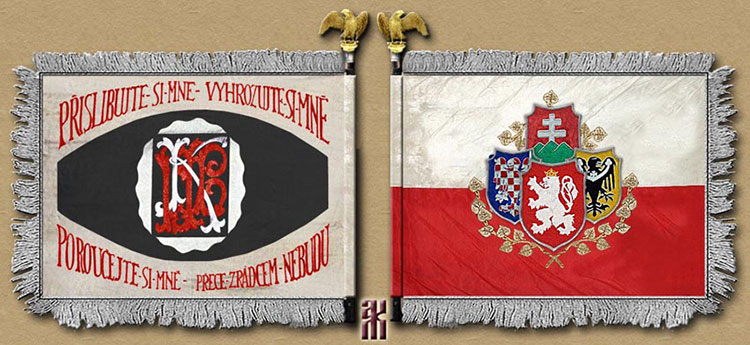
Reconstruction of the flag of the 9th Czechoslovak Rifle Regiment
The unique finial in the form of a diving falcon deserves special attention.
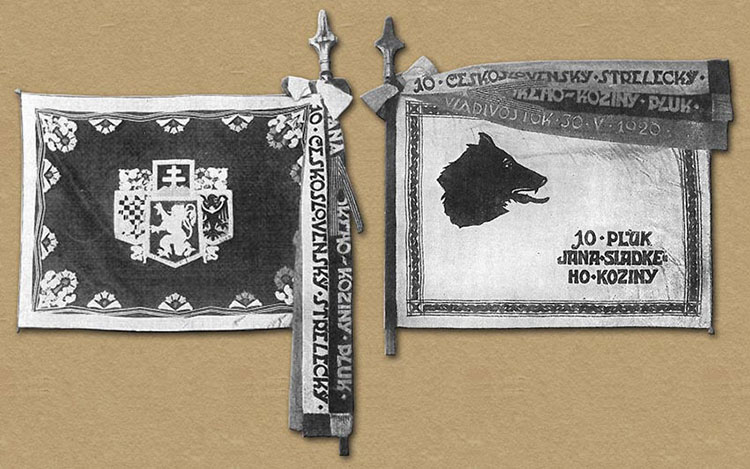
Banner of the 10th Czechoslovak "Jan Sladky Kozina" Rifle Regiment (karelvasatko.cz)
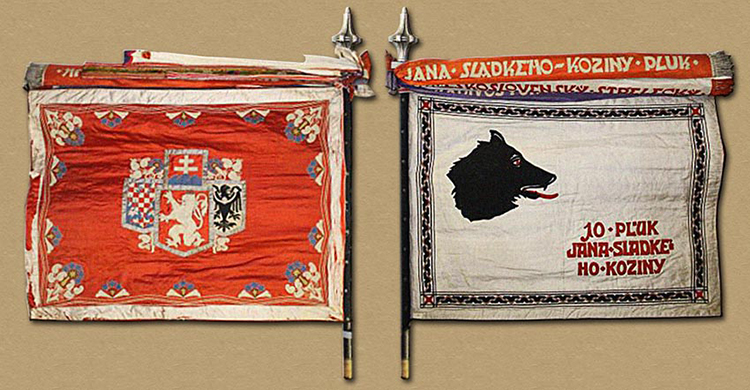
Banner of the 10th Czechoslovak "Jan Sladky-Kozina" Rifle Regiment (current state).
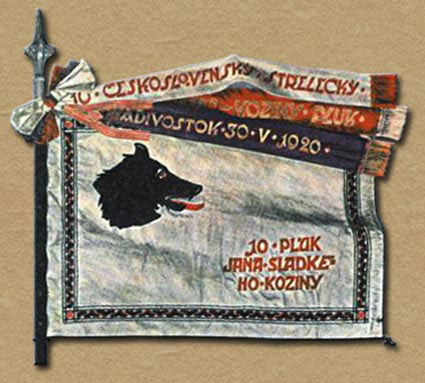
Banner of the 10th Czechoslovak Jan Sladky Kozina Rifle Regiment
This image is from a 1938 poster dedicated to the 20th anniversary of the regiment. The inscriptions on the ribbons are visible, arranged in a different order.
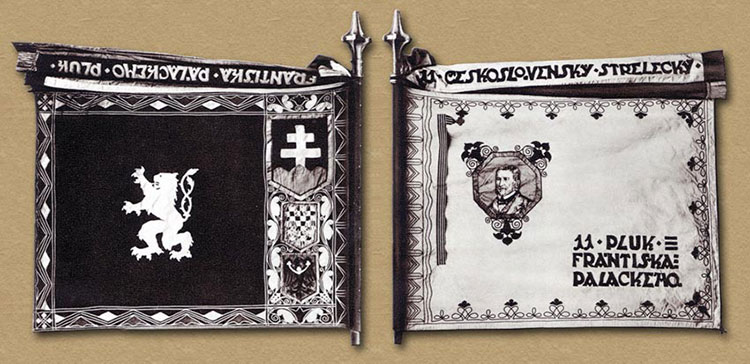
Banner of the 11th "Frantisek Palacky" Czechoslovak Rifle Regiment (karelvasatko.cz)
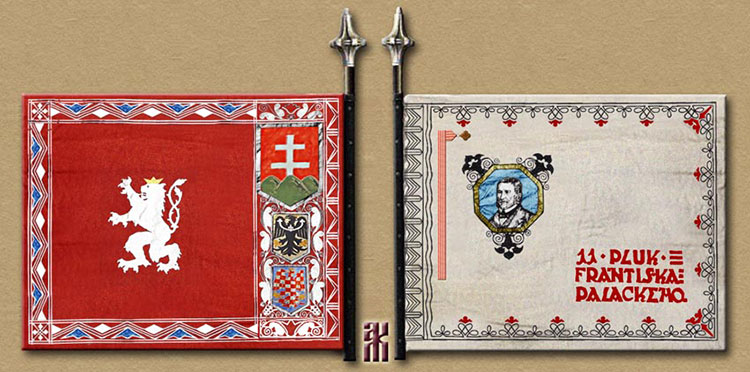
Reconstruction of the flag of the 11th Czechoslovak Rifle Regiment
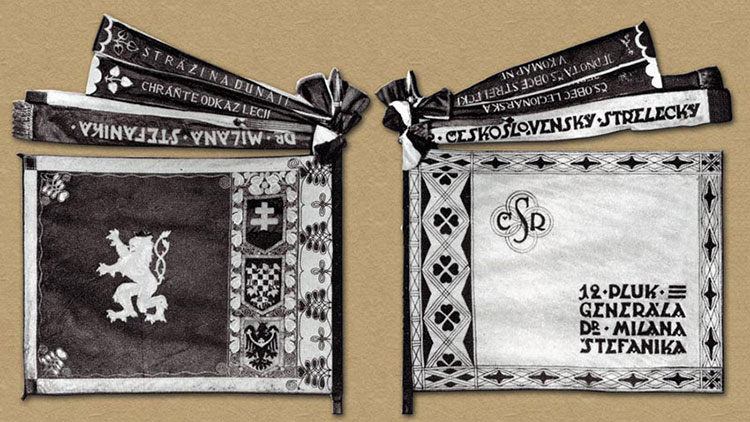
Banner of the 12th "Milan Rastislav Stefanik" Rifle Regiment (karelvasatko.cz)
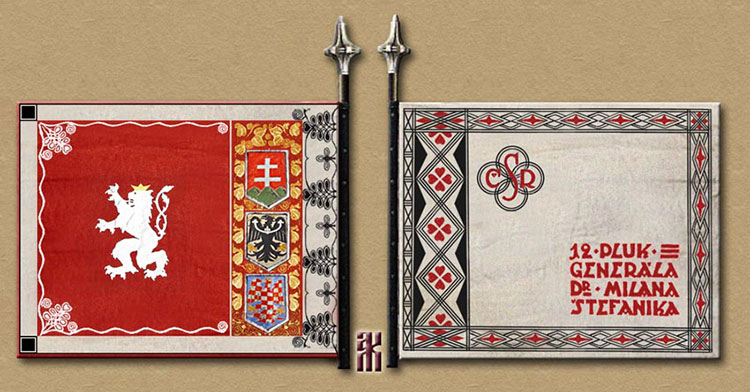
Reconstruction of the flag of the 12th Rifle Regiment
Other Units in the Legion
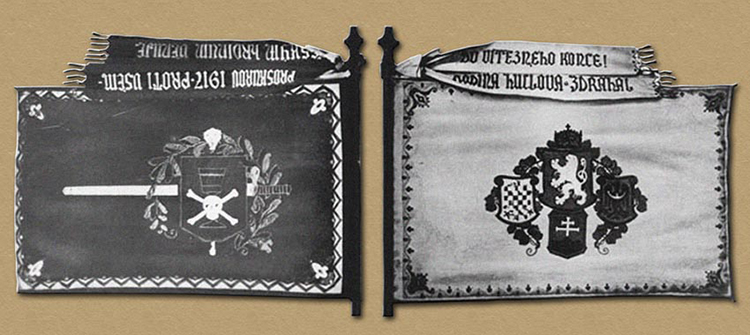
Banner of the 1st Independent Shock battalion, with banner ribbons
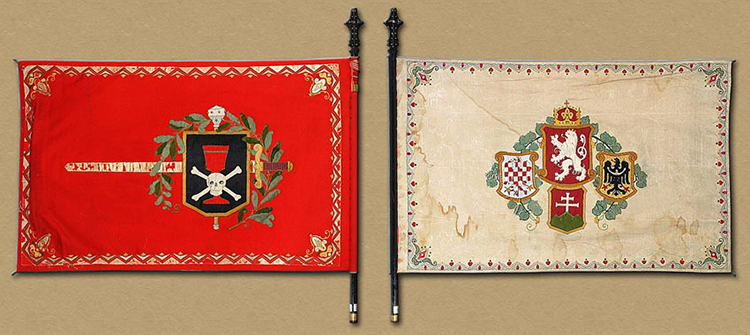
Banner of the 1st Independent Shock battalion, current state
Upon its return to Czechoslovakia, it became the banner of the 6th Siberian Assault Battalion. In 1953 it was transferred to the Military History Museum. After the battalion was restored in 2006 it continues to be used for ceremonial occasions in exceptional cases.
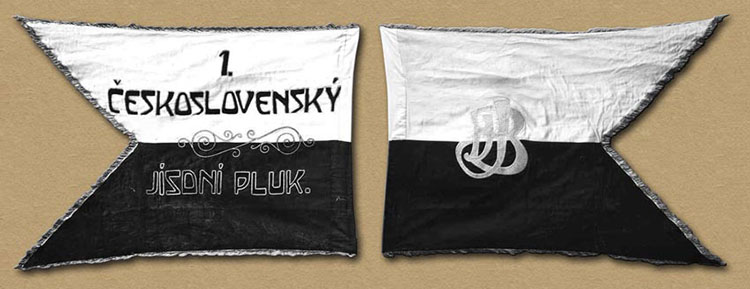
Standard of the 1st Czechoslovak "Jan Iskra of Brandis" Cavalry Regiment (karelvasatko.cz)
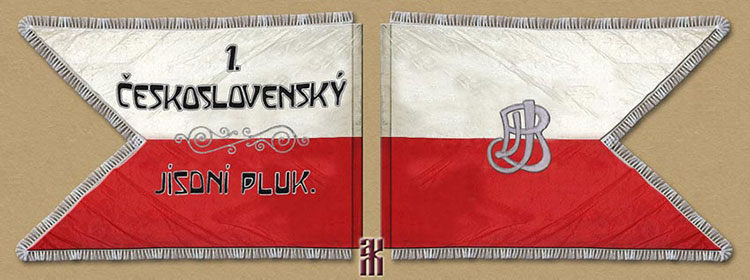
Reconstruction of the standard of the 1st Czechoslovak "Jan Iskra of Brandis" Cavalry Regiment
The shape of the standard was inherited from the old cavalry regiments of the Austro-Hungarian Army (they were this shape until the introduction of rectangular standards of the 1859 model, and then from 1862 onwards they were abolished altogether, except for the 14th Dragoon Regiment, which distinguished itself during the Austro-Prussian War). The front has an embroidered monogram intertwining a "J", "I" and "B" (for Jan Iskra of Brandis).
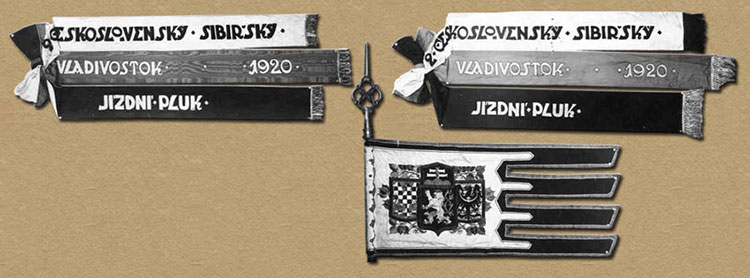
Standard of the 2nd Czechoslovak Siberian Cavalry Regiment (www.karelvasatko.cz)
The panel is a development of the Czechoslovak vexillological traditions. Above are the banner's ribbons.
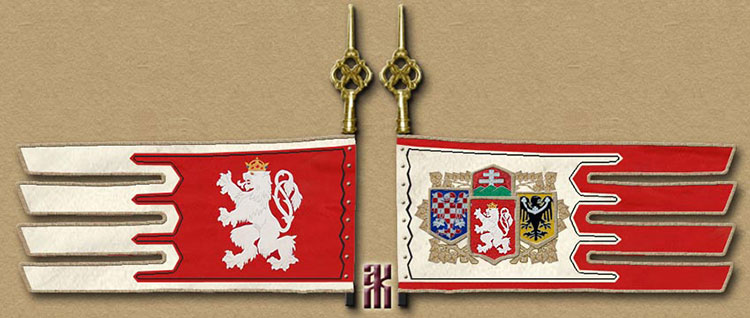
Reconstruction of the standard of the 2nd Czechoslovak Siberian Cavalry Regiment
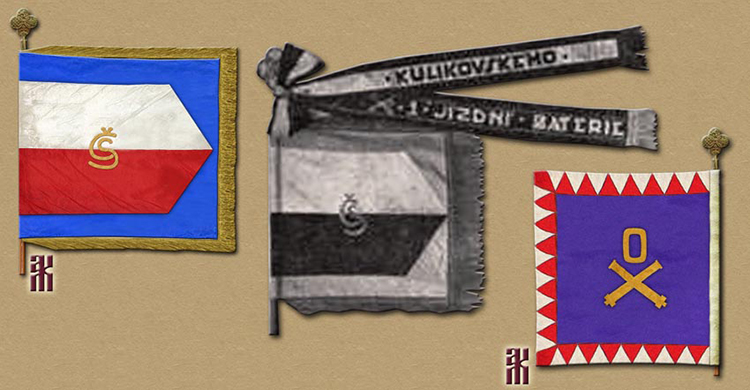
Banners of Kulikovsky's Independent Horse Battery, with a reconstruction to the left, and the Orlik armoured train.
1st Russian-Czech Volunteer Regiment
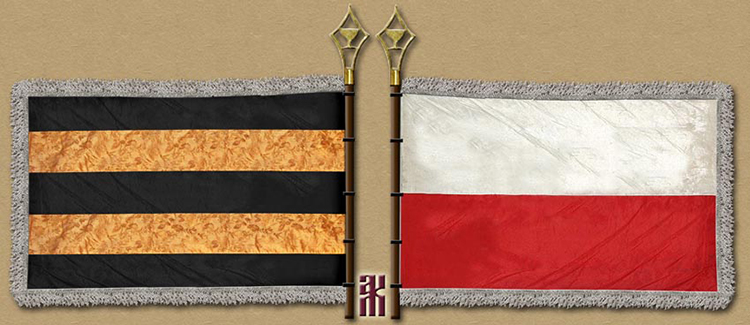
Reconstruction of the banner of the 1st Russian-Czech Volunteer Regiment
The front is in the white and red Czech national colours and the reverse is in the colours of St. George, inherited by the regiment from the distinctive colours of the Volga People's Army of KOMUCH (whose banners had the same black and orange panels). An interesting detail is that a spear with an image of the Hussite Chalice was used as the finial.
Material kindly provided by B. Panus of the Military Museum in Prague.
Sources
Bullock, D. in "The Czech Legion: Men-at-Arms No.447", Oxford, 2007.
www.sammler.ru/index.php?showtopic=22425
sammler.ru/index.php?showtopic=22425&st=0
1723.ru/forums/index.php?showtopic=5030&st=120
tsushima.su/forums/viewtopic.php?id=3306&p=71
www.istpravda.ru/research/11224/
monpartya-mos.ru/strasti-po-kappelyu-vol-fgang-akunov/
www.velebny.de/gestickte-nachbauten-historischer-fahnen-fuer-die-armee
www.historickeprapory.cz
www.karelvasatko.cz/historie-ceskoslovenskych-legii/legionaske-jednotky/ruske-legie
Home — State Symbols — Flags — Uniforms — Badges & Medals — Money — Other
Pygmy Wars Notes
The original of this page is at kolchakiya.ru/vexillology/czech_flags.htm.
All the flags shown here, with the possible exception of the battery and armoured train ones are banners, so unlikely to be seen in the front lines.